No matching lines.
Neil0:00
Sam. And I am not frightened of dying. Anytime will do. I don't mind. Why should I be afraid to die? There's no reason for it.
Chris0:50
You got to go.
Neil0:50
Some kind. Sam ram.
Chris2:25
I was going to try and copy her vocal stylings and I thought, I can't do that.
Neil2:28
You know what? That's why I put it in. I thought you would be all over that. Like you did last week.
Chris2:35
Yeah. With the acdc.
Neil2:37
Yeah, you did. You did Brian Johnson, didn't you?
Chris2:39
Yeah, I did. I did Brian Johnson.
Neil2:40
Monster Sharp. I did not.
Chris2:43
You did a good. That was all right.
Neil2:45
Was it?
Chris2:45
Yeah, yeah, yeah. You should do more of those. You could do it.
Neil2:47
Monster Shark will do it. In the whole. The whole show, I go. So I've got to stop. I'm just having a chat on Twitter with Deborah Meaden.
Chris2:56
I'll just stop that.
Neil2:57
That's how important we are now. That's how important. Deborah Meaden is chatting to me.
Chris3:02
Is she? What's she on about?
Neil3:03
I can't remember. I think we were having a conversation about people not being able to disagree online without throwing a tantrum.
Chris3:11
Yeah. It's impossible, mate.
Neil3:13
And it's impossible. She. But I love it. The context of it is that she's throwing a tantrum because she thinks Elon Musk is removing all of her followers because she. She says horrible things about him.
Chris3:25
Yeah. Right. Okay.
Neil3:27
And I love it. I just love.
Chris3:28
I, I, I have a beautiful irony.
Neil3:31
Lovely discourse here and it's lovely. And I like Deborah a lot. She's great. I don't know whether she likes metal, but.
Chris3:35
Yeah, no, she. She's a top listener. She.
Neil3:37
I bet she likes Dark side Of the Moon. Because everyone likes Dark side. Everyone does.
Chris3:41
Here's a fun fact for you to know about me.
Neil3:43
Go on.
Chris3:44
I, I don't know the album very well at all. I know bits of it. I'm doing any homework.
Neil3:49
I'm dead. I'm sure everyone's shocked about that.
Chris3:53
And I thought that was the first song on the album and it isn't.
Neil3:57
Oh, wow.
Chris3:58
Because it's such a. An iconic.
Neil4:01
It is.
Chris4:01
And I was like. And I was looking at the track list and going, that's not even the first song on the album. How come that isn't the first song on the album?
Neil4:07
Well, what are we doing? Our lead in.
Chris4:10
Yeah.
Neil4:12
Do you remember last week we spoke about. I was going to buy this on vinyl.
Chris4:16
Yeah. Did you actually do it?
Neil4:17
I've not had. And I looked and looked and looked and I was chasing down I was quite sensible. For me, I was looking at original 1973 copies.
Chris4:27
You're going to do it.
Neil4:28
They're worth more than a car. So I decided not to do that. And then there's two other remasters. There's a 2011 remaster, and then there's a 2023. A 50th anniversary.
Chris4:41
Yeah. Yeah.
Neil4:42
The 50th anniversary version is beautiful. But everyone says the 2011 remaster sounds better.
Chris4:48
Yeah.
Neil4:49
I went for the 50th anniversary from Rough Trade.
Chris4:51
Yeah.
Neil4:52
And it's beautiful. It's crystal clear vinyl with, like, colored, like, you know, the. The prism thing.
Chris4:59
Yeah.
Neil4:59
It's got, like, the colors behind it, like, each. Each side. Only one side's playable.
Chris5:04
Oh, wow.
Neil5:05
And it's just phenomenal. Really, really lift it anyway. And I got it. And I was playing great gig in the sky over and over. It sounds so good. I was playing over and over again. Above my record player.
Chris5:15
Yeah.
Neil5:16
Is a light.
Chris5:17
Yes.
Neil5:18
And about six months ago, I used 3M pads and stuck it to the wall. So it kind of.
Chris5:23
Yeah.
Neil5:24
Like, shines down on my record player.
Chris5:25
Yeah. Yeah.
Neil5:26
And now I was writing some code, listening to this album, and the light fell off the wall and landed on top of my record player.
Chris5:33
Oh.
Neil5:33
Crashed the stylus. Crashed the whole thing into the. The disc.
Chris5:38
Oh.
Neil5:38
And has destroyed it. But it's destroyed it in the middle of Great gig in the sky. And I was. Honestly, you know, I feel really sad about, you know, when bad things happen.
Chris5:47
Yeah. That's bad. That is.
Neil5:48
Barney came in and he said. I know. He said, you're. You're really sad, aren't you? And I was. I was genuinely really, like, I don't get attached to things.
Chris5:56
No.
Neil5:57
At all. I don't. Like, if something breaks, I'm just. Oh, don't. Don't care. I'll just. I'll just not use that again.
Chris6:02
Yeah, yeah.
Neil6:03
And. But it's really weird, this re. I, Like, I did, like, a. Like an existential level. I was just like, yeah, I have failed as a human. But I've made a decision.
Chris6:15
What is the decision?
Neil6:16
I've bought another one. No, no, no, no. Wait, wait, wait, wait.
Chris6:22
Because. Yeah.
Neil6:25
I've always wanted to have one of those. You know, people have those things on their wall. I always think, this looks really grown up.
Chris6:31
Yeah, yeah, yeah.
Neil6:33
And. And it's like a picture frame with the vinyl in it and then the discs.
Chris6:37
Yes.
Neil6:37
Yeah.
Chris6:37
I mean, I've got a few of those. Yeah. Yeah. I always think that my records Records I've been involved in making. Of course.
Neil6:42
Of course. I always think they. They just look really grown up.
Chris6:46
Yes.
Neil6:46
And I thought, well, the one I've broken. Yeah, I could put that. Because really pretty still.
Chris6:52
Yeah.
Neil6:53
I can put that in the. In the thing.
Chris6:55
Yeah, yeah, that's. Oh, yeah, that. Oh, you see, what. Where I thought the story was gonna go.
Neil7:00
Yeah.
Chris7:01
Is I got as far as the. Because this is where reality forks.
Neil7:04
Yeah.
Chris7:04
So there's a point where you're talking about the light that you built.
Neil7:07
Yeah.
Chris7:07
I thought you're going to say that you were writing code and you were listening to this album and all of a sudden he gave you the idea that you're going to create your own little light prism. So that actually when you were listening to the album, you'd have a bit of Perspex, so the light would go into the thing and you create the dark side of the moon prism while you were listening to the album. That's not how the story went.
Neil7:24
No. It smashed the whole thing.
Chris7:25
Yeah.
Neil7:27
Looking. My record player. I was. I was. My record player made it out alive.
Chris7:30
Yeah. But Stylus. Cuz they're like.
Neil7:32
Seems. Yeah, yeah, it seemed all right.
Chris7:33
Yeah.
Neil7:33
I think. I think that. I think the record took most of the. It was only like a usb. It's not. Not like it weighs a ton, but.
Chris7:40
Probably, you know, enough to cause.
Neil7:42
Make me really sad problems on Great.
Chris7:44
Gig in the Sky. That. Let's talk about that vote. That vocal. Oh, it's a really controversial thing to say. That vocal is probably one of the landmark things on the album and she isn't even in the band.
Neil7:59
Yeah. The. It's really interesting, isn't it? That is, I think, the reason I really wanted that particular quote from her. And I took me ages to go and find that interview that she did.
Chris8:09
Yeah. Which we'll play. We play that in a minute.
Neil8:13
Yeah. Yeah. So she did this. She did this lovely interview and she talks about. There's a few bits to it. She talks about that. That I think a really interesting one is she had no idea what was going on.
Chris8:25
Yeah.
Neil8:25
So I don't think she even knew which band it was. She was just like, you know, the Alan Parsons who was the engineer. Who's lovely. Alan Parsons is. We'll talk about Alan Parsons a bit later. But he. He was just. He knew it.
Chris8:38
He.
Neil8:39
I don't think she would have known him. He was a tape operator.
Chris8:41
Right. Yeah. Abbey Road.
Neil8:43
Abbey Road, yeah. You start off right at the bottom, like. Kind of. Just kind of Putting tapes away. And then you kind of. What you, You. You like. He's like a. Like a step ladder you go through step by step by step. And so he was a tape operator for ages. And then. So he would have probably known her. And he would have been like, moving tapes around, but she probably wouldn't have known.
Chris8:59
Yeah, he was.
Neil9:01
And then when it was his turn in the big chair.
Chris9:03
Yeah, he.
Neil9:05
I know what we'll do here. And he kind of called her back in.
Chris9:08
Yeah.
Neil9:08
But, like, the great Gig in the sky is a song about death. The whole album is this. This just, I don't know, concept of being human and being alive. Of kind of that Cradle to Grave. Yeah, yeah, great. Gig in the sky is about, you know, that's it. You're. You're dead. Right. And they.
Chris9:27
That explains why it's not the start of the album.
Neil9:29
Yeah, they just dragged her in. It just kind of went. Songs about dying. Can you do some wailing or something? No idea what was going on. And she was. Allegedly. She did, like, two takes, three takes, and the band were like, yeah, that's it, perfect. Off you go. Yeah, they gave a 30 quid for it.
Chris9:49
One of the most iconic moments in musical history. Sold 30 quid.
Neil9:53
50 million copies of. 50 million physical. Well, 50 million and two now, like. But like, 50 million copies. Yeah, physical copies of albums. And you have to bear in mind it got released in 1973. So it came out on. On LP and. And like, real to real. Not little cassettes that you put in your car, but proper big real to real things.
Chris10:19
Proper.
Neil10:21
They. And so anyway, she did all of that and then she. Apparently she was really nervous that she'd overdone it. She'd kind of. She doesn't really know what to do. So, you know, that just felt like the right thing to do. So I did it. And then after we'd done the takes, I kind of felt, you know, this too cheesy. It's too. It's too operatic. And, you know, this is otc. They obviously cannot want that on a rock record.
Chris10:44
Yeah.
Neil10:45
But shall we play it? Because it's. It's lovely hearing her talk about it. I don't remember ever working with Alan Parsons before. I. I knew him because he was an EMI engineer at Abbey Road. So I suppose if I was there, I noticed him especially because he's very tall, apparently. He has said that he heard my voice on one of those cover versions. Do you know. Do you remember they used to buy them for 10 shillings at Woolworths Top of the Pops, they were called, and he apparently had heard something I'd done. I knew nothing about this. I just had a call from this guy that worked at Abbey Road called Dennis, who said. Rang me up and said, was I free to do a session? I was getting to be quite busy at the time and I couldn't do what they wanted. I couldn't do the times. And no name was mentioned. I had no idea who it was for, I didn't even ask. And he said, oh, well, they're very keen to, you know, you to do something. And I said, well, the only time I can do it is the next Sunday in the evening. And so he said, oh, I'll call you back. So he called me back and I said, oh, who is it? And he said, pink Floyd. Have to be honest, wasn't a mad keen fan. So I went up to Abbey Road. I had no idea what it was. Nobody told me. I didn't know whether I was going to walk into the studio. There was going to be a choir, two other girls, three other girls, no idea. So I walked in with my then boyfriend and went into the control room. The band were there and they proceeded to explain to me that they were doing this album, it was nearly finished, and that the concept of the album, birth and death and everything else in between. And they played me the backing track and I said, well, what do you want? I personally had no idea what to do or what they wanted. I said, think the best thing for me is to go into the studio, put the cans on and have a little go and see what happens. So I started off by going, oh, baby, baby, yeah, yeah, baby, baby. Which is what one tended to do for sort of scat. Sort of singing. And they said, oh, no, no, no, no, no, we don't want any words. Well, that really stumped me. So David Gilmour came. He. I have to say that he was really the one that directed me. There wasn't a word from anybody else. And so David said, would I. Would you like me to write out the chord sequence? I said, no, no, no, no, no, no, no. And it sort of happened when I thought, well, I really don't know what they want. I don't know, but, okay, best feet forward, you know. And I thought, well, and I've said this many times, but it's absolutely true that I thought I have to pretend to be an instrument. And that gave me an avenue to explore. And so I started doing something and said, we like that. So I said to Alan, ok, put the Red light on. Record this, because usually the first take is the best because it's very spontaneous and boom. And the more you do that sort of thing, it becomes repetitive and it's not so spontaneous. It becomes sound contrived. Say so put the red light on. And I started singing and did it.
Chris14:23
That was a lovely, lovely, lovely interview that it was.
Neil14:26
She did.
Chris14:27
It's a big one on YouTube. Should we. We need to talk about where these come from. Yeah, a little bit.
Neil14:32
Steal them from you?
Chris14:33
Yeah, we steal them from YouTube and then the audio tracks.
Neil14:36
Yeah.
Chris14:37
And so far, because we're a podcast and it's a bit Wild west, we've kind of got away with it.
Neil14:40
Yeah. So the way I, I, I, I have to be honest, I'm very much reverting to so in software engineering. And when I started my career, I was given this bit of advice from somebody who's incredibly senior and, and he's a household name and said to me, just do what you're doing until someone tells you to stop. And I kind of, that is the way I kind of do that. I kind of think if I'm not hurting anybody and, you know, I mean, I just, I don't know, someone will tell us not to do it if we're not allowed to, so.
Chris15:12
Well, this is the one, isn't it? If it's going to go, it's going to be this episode.
Neil15:15
We got away with acdc, so I'm sure we'll get away with it. It's fine.
Chris15:20
A quick apology to our early listeners of the ACDC podcast.
Neil15:23
Did you.
Chris15:25
I forgot to un, Unmute the interview channel.
Neil15:28
But then you went on holiday then.
Chris15:29
I went on holiday for a week.
Neil15:30
Normally we'd be able to fix that fairly quickly, but we couldn't this time.
Chris15:33
So for those of you that haven't experienced, the ACDC one is perfect. You'll listen to it now and there'll be no pro. There's no problem. It's a perfect. It's perfect. Even during this. This is the one. During that podcast, I complimented myself on how good my editing was.
Neil15:48
You did? Yeah.
Chris15:49
But then obviously, for the first week, no one could hear it.
Neil15:51
I was chatting to Lindsay about your overconfidence this week. Lindsay is one of our friends and yeah, she spotted that there was no. In fact, lots of people spotted that there were no. I had lots of messages saying there's big bits where there's nothing happening. Is there something wrong with me or is it you? I don't know. It's Us. Well, Chris. Yeah, there you go.
Chris16:15
So I totally hijacked. You were going to talk about the interview.
Neil16:17
Sorry, I was. What I was going to say is that she got no credit, no liner art credit at all. So she was not mentioned anywhere in that. And it was such a significant part of the song, she had to go through legal recourse to get added as a songwriter. But it's interesting because. Because the band, obviously, Roger Waters, left after the war. There's quite acrimonious. They don't go on particularly well. So the more I read, like, making even fairly small decisions.
Chris16:44
Yeah.
Neil16:45
It's quite protractive. You need to get everybody to agree. And Waters and Gilmour don't particularly like each other very much, so argue and fight over, like, minuscule things and apparently that's what. It took a while to get Claire Torrey added. But she got a payout and now she gets royalties and she's in the liner art. So I looked in my copy and she's in the liner notes and she's there and it's lovely. And I think. I don't know, it's just a nice thing, because that would have been pretty horrific to me if something that significant didn't go well.
Chris17:17
The thing, you know, you talk about it being. Oh, yes, really important to the song. It's also really important to the album. It's also really important to the band.
Neil17:24
Yeah.
Chris17:24
That minute of that vocal is so quintessentially Pink Floyd. And it's. Anytime anyone plays that you have the full idea of what Pink Floyd is and means in your mind, probably more than anything else they've done.
Neil17:38
It's incredible. We. I saw them live as the full band with Gilmore and waters at Live 8.
Chris17:45
Yeah.
Neil17:46
And that they. There's just something special about that band when they're all together. Do you know what I mean? When they're all together, all doing their thing.
Chris17:54
They were actually on stage together.
Neil17:55
Yeah. Yeah, they were. Yeah. Everyone thought they were going to have a reunion in that. I think they fell out on the stairs on the way to the stage. I also want to talk about the album itself, and just the content is a concept record.
Chris18:11
Yeah.
Neil18:12
And there's a bunch of things that I love about this album. So I. I like the concept. So the concept of, like, mental illness all the way through it. Like Brain Damage in Eclipse and it's this. The lyrics talk about the fear of losing control.
Chris18:31
Yeah.
Neil18:31
And, you know, the. The fact that that mental illness can impact you and then you kind of lose yourself at that point, it's not like a physical injury where you're okay but you've broken your leg and. Or you're okay and you've. You know something's happened to you, or you're not very well yourself is being lost. And I think that scared Roger Waters hugely. But what's fascinating about this, I think, is that. So that was clearly written about Sid.
Chris18:59
Yeah.
Neil18:59
I was just thinking about Syd Barrett, and there's all the lyrics in there about the lunatic, he's on the grass. It symbolizes the line between sanity and madness. But it was also written particularly because when Sid came into this, Sid had kind of wasn't actively part of the band for a long time. He'd been taking acid and LSD and got in with, like, a really kind of heavy crowd of people in London. Wasn't functional as part of the band, but just turned up to the studio one day.
Chris19:28
Yeah.
Neil19:29
And that line, apparently, the lunatic is on the grass was written specifically about.
Chris19:33
Yeah.
Neil19:33
But then it's that kind of, you know, that the delineation of. You walk on the path, you're normal, and then the grass is that kind of. You've lost control. So I love that. I love the fact that it talks about time.
Chris19:47
Yeah.
Neil19:48
So we're gonna play time in a little while, which, I mean, if we don't get a copyright strike for this, I think we'll be. I don't know. I don't know what we'll do, but we'll have a. I don't know what. You know, what if we don't get copyright struck for this? Yeah, we'll have some of those lovely fruit pastels.
Chris20:01
Yes.
Neil20:02
Next week.
Chris20:03
Yeah, okay.
Neil20:04
Yeah, that'll be nice if we get away with that. But time, the fleeting nature of life. And I think one of the things that speaks to me about this album is the timelessness of it.
Chris20:17
Yeah.
Neil20:17
Right. So the things that they're talking about here in 1973. That's the year I was gonna say I was born.
Chris20:25
Yeah. Yeah. This is it. When you're talking about, you know, in mental health and things that are. Are very now and current in the last few years. And, you know, musicians were talking about.
Neil20:34
This stuff, and it doesn't change, does it? Like time. There's a lovely bit where David Gilmore is talking about. He's only. He's got this studio and we'll play a little clip of this in a bit where he talks about getting his guitar tone and stuff. But he's got this studio on a Boat. But there's a brilliant bit. It's in a different bit of an interview where he talks about not understanding the lyrics. He didn't understand what this track time was about. He didn't speak to him until he got into his, like, 60s.
Chris21:04
Right.
Neil21:04
And then seven and then he start. Do you know what I mean? I kind of get it. It's kind of funny, isn't it? You know, this song is like, you know, your kind of clock can get punched at any point in time.
Chris21:14
Yeah.
Neil21:15
This could be the last minute or the last day that you. You have. And it's. I don't know. I just think it's phenomenal. I just think this. The music on this album is stunning, but the lyrics and the meaning and the. The structure is, you know, I mean.
Chris21:28
If I can just dive into. Into that theme and just reflect from a personal level about, you know, the circularity, for example, as a record. Because that is a concept.
Neil21:36
Yeah, of course, in.
Chris21:37
In many ways. And the. A lot of the songs that. Well, a few of the songs that featured on that record were written 15 years prior.
Neil21:47
Yeah.
Chris21:47
You know, A long time before. And. And they. They didn't make sense until we were making that record. So I can wholeheartedly kind of, you know, resonate with the idea of actually when you create something in the spur of the moment, sometimes the mean, the actual meaning of it isn't apparent to you till. Till years later as a creative kind of, you know, acts. It's just pouring through. You just do it and then suddenly you make the patterns out of it and you make the sense of it later. Yeah.
Neil22:17
I think that's incredible. Yeah. Hearing you say that about circularity as well, I think that's. That's phenomenal, I think. But. And you know, the other bits on the album, so you've got tracks like Money, they're talking about greed. And I think that they were. You're very aware of like, kind of the. The corruption in the music industry at the time. And it was a. It was kind of very much around that. It was written around just kind of the. The nonsense of, you know, where all that money goes and how little the artists got and how much, you know, how much was going to the record label and stuff.
Chris22:52
I mean, that's unbelievable. 30 quid. I mean, yeah, that. Whether that's the reality of it or urban myth, whatever. But, yeah, the. The idea of someone getting 30 quid for that take, that's such an iconic part of musical history is just. It's just incredible that you know, it is.
Neil23:07
It just. It's. Yeah, it's just phenomenal. And then. But then that. The existential search for meaning as well. So you've got that in kind of us and them and Eclipse, just talking about peace and conflict and the other human condition. Yeah, yeah, yeah. It's just. I don't know. Lyrically, we don't often dive into the lyrics on. On these podcasts, and I think we probably should dive in a little bit more, just kind of look at the understanding. But for me, this album makes more sense the more, like, the more you put into it, the more you get out of it, if that makes sense.
Chris23:37
It's a great, great analogy for the experience of it, and I've not put enough time into it.
Neil23:43
It's. It's an album that. When. When people were telling me to listen to this, I. I was listening to thrash. I was listening to Overkill and Exodus and Slayer, and then this was too slow.
Chris23:54
Yeah.
Neil23:54
So I would put this on. I'll be like, what's. Why is it you? Something's broken. It's not. I just couldn't engage with it, like in. In my teenage years and twenties. Just could not make sense of this album at all. I just. I didn't understand what people saw in it. Couldn't understand the love for it. And, yeah, it took me. I don't know, it's probably in my 30s, mid-30s, that eventually. But you know what? Actually, it was probably when we. It would have been like. Was it 2005?
Chris24:21
Yeah.
Neil24:22
Live 8. Yeah, we went to see them. I went. I went to see. Oh, God. Who was a Velvet Revolver.
Chris24:32
Okay. Yeah, yeah.
Neil24:33
So that was. That was the only band on the bill I cared about. And I've gone with other people and I thought, you know, this is going to be. It's going to be really boring. But, yeah, it was. Velvet Revolver was the band who were terrible. They were. They were quite clearly inebriated.
Chris24:46
Yeah, yeah.
Neil24:47
Didn't play particularly well. I thought it was pretty. Pretty crappy gig and Pink Floyd blew me away.
Chris24:52
Yeah, yeah.
Neil24:52
And it was like, probably a few weeks after that. You know, things just, like, percolate in your brain a little bit.
Chris24:57
Yeah, yeah.
Neil24:58
And I was just like, sitting, thinking, do you know what? I'm gonna go and have a listen to that. And. And. And then it just. I don't know, it just made sense to me at that point. And I was like, oh, I kind of get it. Rolling Stones did the same as well.
Chris25:09
Yeah, yeah.
Neil25:10
Some of the bands that you've recommended as well over the years that I've just like, I don't. I've never, never ever listened to that band ever before.
Chris25:18
Yeah, yeah.
Neil25:19
And then. And then you'll have gone, oh, no, it's the best band ever. Best band, best album. It was the Counting Crows when we did Recovering the Satellite.
Chris25:25
Yes.
Neil25:25
Yeah, I liked the albums like after that.
Chris25:30
Yeah.
Neil25:30
I like.
Chris25:31
I liked the Hard Candy and that was it. Yeah, yeah.
Neil25:34
And I'd never listened to that before. And then going back to it. Oh, this is. Not only is this Door, like. I love it.
Chris25:40
Yeah, yeah, yeah.
Neil25:41
Phenomenal record.
Chris25:43
So.
Neil25:43
Yeah.
Chris25:43
I think the thing about. About this record, the. The Dark side of the Moon, though, is. And this. This, you know, I'm. We're doing this and I'm probably a bit embarrassed because I'm as for saying such a legendary album that it is. I've probably only heard properly paid attention to the key tracks on it.
Neil25:58
Yeah.
Chris25:58
I've probably heard it through a few times.
Neil25:59
Yeah.
Chris26:00
But never paid attention to it in a way that I should have. And even putting the great gig on the sky. Great in the sky. On at the beginning.
Neil26:08
Yeah.
Chris26:08
And having the headphones on.
Neil26:09
Yeah.
Chris26:09
And hearing where the organs position in the ear. And I'm going, I need to listen to this on headphones, this whole record, because I don't have a relationship with it. And I think I'm probably going to end up having a really personal relationship with it, but it's going to only happen by me spending time alone with it in my ears.
Neil26:25
It is.
Chris26:25
It's through headphones.
Neil26:27
You know, I would treat it like watching a movie.
Chris26:30
Yeah, yeah, yeah.
Neil26:31
It's not an album I would put. Like I. I can put. You know, we talked about what was the first show we did. Jeff Buckley.
Chris26:42
Yeah, we did Grace.
Neil26:43
Yeah. Same thing for me that I put that on in the background and it didn't make an. It only made sense when I put my headphones on and then closed my eyes a little bit. Yeah, good. This is one of those dark room.
Chris26:54
Yeah, this.
Neil26:55
This is what you do. It's not a background album. It's not something that you, you know, you exist with.
Chris27:01
Yeah, yeah.
Neil27:02
You. You. This is it. This is what you. You focus on.
Chris27:04
But it's the. But it's the stereo field of it. That's the other bit is that. Is that, you know, if you're gonna have to have a really good room with good speakers and good acoustics, nice set of headphones to listen to it on. Because. Because the way that the stereo field and the space is used for this record, it needs to engulf you. It needs to encompass you, around you. And I just got that just from that first snippet going. Oh, I need. That's. That's how I need to listen to this album. I can't have it on.
Neil27:28
It's got to be.
Chris27:29
It's got. It has to engulf me. Yeah.
Neil27:32
Let's play time and then we'll talk about how it was record. Sa. Digging away the moments that make up a dull day. Fritter and waste the hours. In, off and wait. Picking around on a piece of ground in your hometown. Waiting for someone or something. Something to show you the way. Tired of lying in the sunshine. Stay long to watch the rain. And you are young and life is long. There is time to kill today. And then one day fine 10 years ago behind you, you. No one told you when to run. You miss the starting game. Catch up with the sun racing, racing around to come up behind you again. Sun is the same in a relative way. But you're older, shorter of breath and one day closer to death. Every year is getting shorter. Never seem to find the time. Time that neither come to hold or half the page. Hanging on in quiet desperation Is the English way. The time is gone, the song is over. I thought I'd something more to say. Home, home again. I like to be here when I can. When I come home cold and tired it's good to warm my bones beside the fire. Far away across the field. Tolling of the iron bell Calls the faithful to their knees. Hear the softly spoken magic spell.
Chris34:17
Do you know what I love?
Neil34:19
Beans on toast.
Chris34:19
Beans on toast. Also Pro Tools.
Neil34:22
I love Pro Tools now do. Don't you?
Chris34:24
Oh, it's so good. I've used all the different ones, but I love this one.
Neil34:29
I. I want to talk about how this album was recorded.
Chris34:33
Yes.
Neil34:33
Talking about Pro Tools. Not on Pro Tools 1973 at Abbey Road Tape Neves. It was an EMI desk, I think.
Chris34:42
Oh, emi.
Neil34:43
But the bit that is interesting is that it was a manual desk. Now it's worth.
Chris34:51
They're the ones where they're like. They've got proper. They're almost like, you know, when you fly a plane, you've got the thing that you push forward and back. That's what the fade. That's what the faders were.
Neil35:01
You know when you see DJs.
Chris35:02
Yeah.
Neil35:02
And people say, what do DJs actually do?
Chris35:04
Yeah.
Neil35:05
It's that. It's so when they recorded something so let's say they recorded Clair Torrey and Claire sang too loud for one bar. One bit was too loud. There will be a fader on her channel. Channel. And then when they were bouncing that.
Chris35:22
To tape, someone would have to.
Neil35:24
Someone would manually have to move that fade up and down at the right point. Yeah, Every track, every time that was recorded. So it was like a manual desk. Sounded great. Didn't have much in the way of automation. There was a lovely interview that Alan Parsons, who was the recording engineer, gave with rick Beato on YouTube. So if you're not familiar with Rick Beato's channel, search him up on YouTube. He's brilliant. He did this phenomenal thing with Alan Parsons where they talk about other things as well as Dark side, but it talks about Dark side. And it's fascinating because looking in my research notes, it says that Abbey Road was cutting edge and had the best of the best. Alan Parsons, who worked there, he kind of was trained there. He was. Spent most of his life there. So they were not. It wasn't cutting edge. They were always behind everybody else. So when everyone. When 8Track came out, they still had four tracks. Because at Abbey Road, every piece of hardware had to go through this technical review process. They had a bunch of technical wizards. And so when the new eight tracks came out, the eight tracks would go to this team and then they would kind of like, see that. They would give it like a yes or no.
Chris36:37
Yeah, yeah.
Neil36:37
And they would strip them down. It will be down to you.
Chris36:39
You.
Neil36:40
You know, the type of capacitors that were used in inductors and how it was soldered together and whether they liked the. The hardware or not. And so he said that they were almost always behind. So I think. I think this was done on two. I might be wrong. I think this was on two, eight tracks.
Chris36:59
Yeah, yeah.
Neil37:00
But like everyone else was on 16s and in the US they had 24s.
Chris37:03
Yeah.
Neil37:04
And, you know, they had. Oh, no, it was done on two 16s. I think. Think Dark side. But it was interesting. They were always a little bit behind.
Chris37:10
Yeah, yeah.
Neil37:12
Where everybody else was. But the fact that they had them like the. You know, lots of albums not far. I mean, this is 1973, remember, lots of them were four track. The. This gave the band the. The breadth to start thinking about how to use those extra tracks and what to do with them and the samples and.
Chris37:34
So the idea of layering. Yeah, yeah. So there's that. There would have been that transition through thinking about Abbey Road bands like the Beatles, where they were starting to play that game with layering things.
Neil37:45
Yeah.
Chris37:46
Before that it was just playing live and capturing that. And now we're talking about the creation of sonic landscapes through the creative process of music production. In a sense, that you are building a song.
Neil37:59
Exactly. And it took. Alan Parsons, did the Beatles. Yeah. So he'd been. I mean, imagine that had been the recording engineer for the Beatles and then doing Dark side. But, yeah, so he. He'd learned that. He was learning how to do all of that stuff with those creative, like, you know, masterminds, essentially. The. The bit that is interesting, I think, though, is that that extra space, those extra tracks allowed Roger Waters to go and do some creative stuff. So, yeah, there are vocal, there are. There are spoken word all the way through this album. There's tons and tons of, you know, the. The kind of the. The. The track, essentially, that the. The album, you know, they. Roger Waters went off and interviewed people like the Doorman, I believe he interviewed somebody famous from the Beatles. Who was it? I can't remember who it was, which one of the Beatles it was, but he interviewed somebody and scrapped it because it was too boring and too many platitudes in there. And he felt it was just. It wasn't genuine and honest and interesting. And he said, you know, he wanted these conversations about life and death and. And greed and all of this. He wanted people to be genuine and honest. And he found that. He got them. The road manager. They speak to their. Their touring team, their road crew, the sound, the. The security guy for. For Abbey Road Road, and they're the people you can hear talking.
Chris39:27
I mean, that's the. That's the point where it. Where it transcends music and becomes art, isn't it? And an expression of something bigger than just the song.
Neil39:37
Yeah, it is.
Chris39:38
And I think that's that, you know. Were you talking about how the band don't get on and there's this huge kind of rift between Roger Waters and David Gilmore, and I wonder if that's part of that, where that tension comes from.
Neil39:51
Yeah.
Chris39:52
Because perhaps Roger Waters is thinking about everything from a performance or artistic perspective as opposed to a purely song, craft, musical tonality kind of thing. And I don't know, I can imagine. I can imagine those two worlds. Great in.
Neil40:06
Yeah, I think it did. I think it's interesting, though, because I think the balance works.
Chris40:10
Yeah. Yeah. Well, you can hear it on this record. You can hear it on the wall. And, you know, I don't know, sometimes some relationships work on conflict.
Neil40:17
Yeah, It's Probably a good description. But the. So I got a little list of the. The. The spoken word part. Right. So on. Speak to Me. The voices. So the. The voices. There is Jerry Driscoll, who was the Abbey Road doorman, saying, I've always been mad. I know I've been mad, like most of us have. It's very hard to explain why you're mad, even if you're not mad. And I. I love that. And then the. On breathe, the. The. The voices from Speak To Me kind of carry through into that. That. And then you've got time where it's Chris Adamson, where their road manager could put in. I've been mad. I've been mad for years. Absolutely. Years. Followed by. I've been over the edge for Yonks. Been working with bands so long I can't remember. I can remember if it was the first time I saw it or if it was when I got sick. You can't hear these kind of. The tones as it kind of runs through.
Chris41:13
There's that constant thing of, like being over the line. Yeah. That descent into madness bits.
Neil41:17
The. Absolutely. Some of the killer bits. There is the great gig in the sky again. Gerry o'. Driscoll. I'm not frightened of dying. Anytime will do. I don't mind. Why should I be frightened of dying? There's no reason for it. You've got to go sometime. That spoken word part for me is part of the album. That is part of this album. When that comes on kind of sends shivers down your spine a little bit, you know. And it's not lyrics. It's not.
Chris41:40
No, no. It's a human commentary.
Neil41:41
It's just incredible.
Chris41:43
That tells the story that. Yeah. The human condition, the thing you're talking about.
Neil41:47
Yeah. And in Brain Damage, it's got the. It's got Peter Watts, who was their road manage, kind of just laughing. That kind of cackle and laughing in there kind of during. During Brain Damage and then. And then eclipse. The final bit of the album again. Jerry o' Driscoll says that there is no Dark side of the moon, really. It's all dark and it's just. I don't know, it's just like this. This thing having those extra spaces in the tracks.
Chris42:15
Yeah.
Neil42:15
Just gave them the breadth to do it. There's. There's other stuff here where he didn't like Compression wasn't a big fan of it. So Compression was around in 1973, you know, but he just didn't really. He felt that it. But overuse of it destroyed the Sound.
Chris42:39
Yeah.
Neil42:40
And one of the things that I liked is he had this discussion, apparently, with one of the other recording engineers who much preferred compression, who, you know, kind of his boss, essentially. He was like, look, I'm. I don't think I'm going to use compression on this. And. And he was challenged, why not? And he said, well, I think it's going to destroy the drum sound, so we'll just don't compress the drums.
Chris43:02
Yeah.
Neil43:03
And that's what they did. So there's no compression on the drums, but there's compression on everything else. But again, not much.
Chris43:09
Yep, yep.
Neil43:10
And he.
Chris43:11
I think it add for flavor. Yeah.
Neil43:14
But he kind of shows through this. This album, for me, still sounds great today. It doesn't sound perfect. There's bits in there where it's a bit splashy in places, and I think some of the symbols are. They're not like. They're not perfect, but I don't know, it kind of. For me, it kind of feels. It feels really genuine and honest and there's a space to it that is just. It's just. Oh, the world is phenomenal. All those layers, all of that stuff happening. Yeah. It's the way it was recorded, I think, is just really important, but really, you know, very manual.
Chris43:50
Yeah, yeah, yeah.
Neil43:51
Everything was super manual. And shall we. Shall we flip to that clip of David Gilmour talking about how to get his tone?
Chris44:00
Yeah.
Neil44:00
Because I think it's really cool, the.
Chris44:03
Floyd sound, which sort of created a whole universe for people to sort of inhabit. And I mean. And that, in its own way, just felt like. And still feels like it's. It's never been quite. No one's ever quite done that before in that way, you know, when you were. It's a very hard thing to puzzle out, you know, myself, how these things happen, you know, what combination of personalities and sounds that people, you know, taste for individuals taste comes together to. To make something that has got space and atmosphere and theater and God knows what else to it. Something magic comes out of bending little bits of wire. Push. The wire gets tighter, the pitch goes up. You do it absolutely all the time, a little bit. So that every note, you know, is just the tiniest little things, which is what makes the guitar sort of so personal. You can add a hundred different tiny inflections to what you're doing all the time. And that, I guess, is what gives people their individual. Pink Floyd and many, many other people did solo on for hours. It's a lot of fun to do. I can't Quite imagine being in the audience and listening to it. Picture the scene, David Gilmour on his boat playing the guitar.
Neil45:53
It's lovely. It's worth YouTubing and finding that because it's lovely. And the bits I like about that. When he starts talking about being able to lean back into the sound or when you're on stage.
Chris46:04
Yeah, yeah, yeah.
Neil46:05
So you're on stage, you've got the. The. The stack behind you. He said the. The sound is so big and thick, you feel like you can lean back into it. And I just love this really descriptive way of. Of that. What sound does.
Chris46:19
The other part of it is when he's talking about the. The way that. But you're kind of. The way you interact with your instrument.
Neil46:27
Yeah, yeah.
Chris46:29
And there's the. The artist Dead Can Dance, which are a kind of goth band from the 80s. Liz. Liz Frazier, I think it is.
Neil46:40
Yeah.
Chris46:41
Lisa Gerard. Liz Frazier. Who's who? We'll get bull with those two. One of them did Teardrop.
Neil46:47
Yeah.
Chris46:47
And then when Lisa. Gerald. Lisa Gerard is the singer from that band. Liz Frazier's Cocktail Twins.
Neil46:53
Ah.
Chris46:53
So. Yeah, y. So. So Lisa Gerard did this. The. The. Have you ever watched Gladiator?
Neil46:58
The film Gladiator? No, that's something else.
Chris47:03
Yeah, Dead. And he.
Neil47:04
He's dead sad. He's dead. Yeah, yeah.
Chris47:07
So I'm not laughing because he's dead. I'm laughing because of the. In joke based around death that we have. So the. Yeah, the thing about Lisa Gerard in Gladiator, that kind of vocal, you know that. That voice. That's her. She's did the. That Dead can dance. The meaning of that band is about that. It's about the taking of a. An inanimate object and animating it through interacting with it.
Neil47:33
Yeah, yeah, yeah, yeah, yeah. I'm with you.
Chris47:34
So you're making a dead. A dead thing.
Neil47:37
Do a thing. Yeah. I love the bit where he talks.
Chris47:39
About really long explanation.
Neil47:41
I love the bit where he talks about said. Even just pressing the string on a guitar. Like you will do it differently to me.
Chris47:48
Yeah, exactly.
Neil47:48
So you'll go and say, play this note and I'll play that note and you'll play that note and we'll. It will sound different. And I do really like that. I like that a lot. Shall talk a little bit about commercials.
Chris48:01
Yes, yes, yes, yes, yes.
Neil48:02
So we did. We did Back in Black last week, which sold 50 million copies. This 45 million-plus. It says. I think that the numbers that we get are from the US 1.2 billion streams. So as you mentioned before, that's about as much as we can. A couple.
Chris48:22
Yeah.
Neil48:23
On Spotify, I saw a quote this week that says daniel Ek makes more, gets paid more in one year than any artist has ever made.
Chris48:32
It's unbelievable is that.
Neil48:34
It's not funny, but it made me laugh. The wall sold 30 million copies. Wish you were here. 20 million. And medal sold 5 million copies. That's a lot of. There's a lot of Pink Floyd.
Chris48:48
Yeah.
Neil48:49
Albums. Especially when some of those were like I say they, the. The copies would reel to reel tapes or vinyl tape. You know, it would have been physical. Large format media comparisons with others at the same time. The Eagles, Hotel California sold 32 million copies. Fleetwood Mac Rumors. I would have thought this was much bigger, but that sold 40 million copies. And then Pink. Sorry, The Rolling Stones, Exile on Main Street, 1972. 10 million copies.
Chris49:18
Wow.
Neil49:18
I'd have thought that would have sold more as well. Well, so just Phenomenal. Only had two singles. So they released Money and Us and them. So Money, US, Billboard. It debuted at number 13. Didn't chart in the UK.
Chris49:36
Wow.
Neil49:37
Incredible. I think. Well, I think that's absolutely incredible. You know, the. I was going to do the. In the blog that we do about the show, we do a five things you might not know. And one of the things that I didn't know about, like I'd read tons and tons about this over the years. One of the bit that I didn't know was that the, you know the album opens with the heartbeat sound.
Chris50:03
Yes. No, I didn't. Because I thought it opened with Greg again today.
Neil50:06
But I thought it was. I thought it was a heartbeat.
Chris50:09
Right. Okay.
Neil50:09
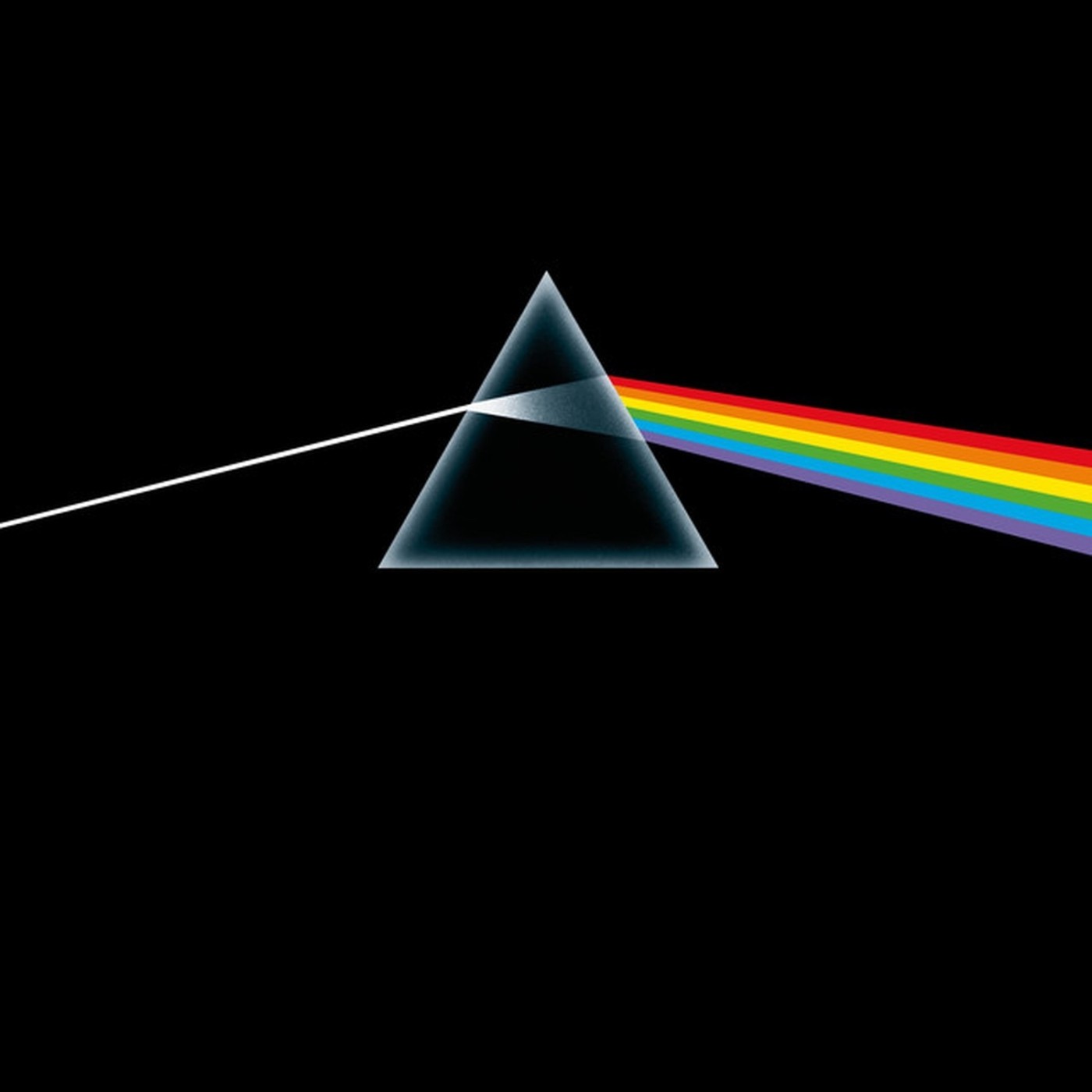
And it's not. It's a drum. Oh, wow. But they mucked around with all kinds of like processing and it's a kick drum. It's all kinds of heavily processed stuff to make it sound like a heartbeat. And I did not know that at all. And also the, the COVID was done by Storm Thor Gerson and Aubrey Powell of Hypnosis is the, the company that did it. And they had a load of different choices and they, they felt that was the most appropriate for the album they were doing. But it's so iconic.
Chris50:45
It is so iconic.
Neil50:46
It's phenomenal.
Chris50:47
You.
Neil50:47
You see that, that prism and you know, do you know what I mean? You know exactly what it is. I was a little disappointed. The 50th anniversary copy that I have on LP that I broke the second version. So the original version is just black with the prism.
Chris51:02
Yeah.
Neil51:03
The 50th anniversary says in massive white. It's a bit like Hitchhiker's guy. Yeah, don't panic. It's massive text. The Pink Floyd, the Dark side of the Moon in big thick white letters.
Chris51:15
Yeah, yeah.
Neil51:16
And I don't know, I just think it's really. It's interesting that they chose to do it other things quickly before we go into some more clips and things. Film appearances. They're very protective about where it gets used. The Dark side, however, there was a thing called. Are you familiar with the Dark side of the Rainbow?
Chris51:34
No.
Neil51:35
Apparently if you start the wizard of Oz in 1939 version and Dark side of the Moon, it goes together.
Chris51:43
Oh, there's got to be a clip of that. I'm not sure made a clip.
Neil51:46
Not sure how I feel about that. A Doctor who. Do you remember the Doctor who theme sequence at the beginning? That. Yeah, yeah. It's not Pink Floyd. Sounds very much like Pink Floyd. There is a lovely bit in the Hitchhiker's Guide to the Galaxy where he says your. Your robots make your. Your robot makes a sound like Pink Floyd.
Chris52:09
Yes.
Neil52:09
There's a lovely clip in there where he does. Oh, God. What else did I want to talk about in there? Oh, yeah, just the billions of documentaries. If you go onto YouTube and search pink Floyd documentary, you'll be there for like, for. In fact, you'll die before you have watched all of them. There's just ridiculous. Ridiculous number of them. It's phenomenal. So I think that's me. I think I've got all my points out. I feel like I've exhausted all my points now.
Chris52:39
There's a couple of things to do before we finish the first. Is there. I don't know, part of the. The Pink Floyd law or the legend of Pink Floyd is just how, how, how famously they didn't get on.
Neil52:54
Oh, the bicker. Yeah.
Chris52:55
It's unbelievable. Like. But you can hear it. You can hear it. There's a clip we're going to play in a minute.
Neil53:01
The tone. Yeah.
Chris53:02
It's like everything's an argument. Yeah. Everything they do is conflict.
Neil53:06
I would describe it as combative. It's kind of like, you know, I mean, it's kind of like my favorite color is blue. Unless you say you like blue, in which case I'm now going to say it's red. Right. And it's.
Chris53:17
It's exactly that, isn't it?
Neil53:18
Let's play it. Cuz it's a really cool clip. You altered your tone control today. Nope.
Chris53:23
You altered your Volume control?
Neil53:25
I don't think so. Why? What's different? Didn't sound quite as toppy. What? Didn't sound quite as toppy. It didn't sound as toppy? No. Well, it must have been a toppy. Okay. If the only thing it could have possibly did is less Toppy. More toppy. All right. I mean, you know, we all know that you're God Almighty. That isn't an answer. Send for less Brady. No, Steve, you're jolly good at your job and everything, but there's no way you could ever produce a record, so it was silly of you to try.
Chris53:59
No, rubbish. I know.
Neil54:01
Yeah, it's true. I mean, if you take a craft enough group and they've only got 12 songs. Oh, well, you're talking about producing works of art, I mean, or whatever. I mean, that's only about 0.1% of the market. There's plenty of other going on. No, we're not. We're not talking about that at all. We're talking about. A record producer is somebody who is in charge of a recording session. Right. And in order to be in charge of a recording session, you need to have a kind of minimum. Well, it's not minimal, you know, you need to have a fairly extensive knowledge of what the equipment's about and what music is about and what rock and roll's about. Well, Steve knows what rock and roll's about. He's got no idea what the equipment's about and he's got very little idea in. In terms of kind of technicalities, what the music's about. He knows what he likes. Plenty of people have produced records on that basis. Very successful record. In the finished article. The only thing that is important is what. Whether it moves you or not. There's nothing else is important. I can't get over the sibilance of the vocals on Obscured By Cloud.
Chris55:00
I never play that record.
Neil55:01
You're actually in the wrong business. Oh, well, that was a bad cut. That's got nothing to do with the production of the album. That was a bad cut. And if you listen to the second string of pressings, you'll find that sibilance isn't there. Well, if you can still hear sibilance on the second string of pressings, you've got an extremely overactive imagination, because there isn't any. We have some pretty good arguments from time to time. Yes, we do have infighting, but. You mean without actually exploding? We seem to have managed to avoid the things that really get people too touchy these days.
Chris55:38
Yeah. And for Me, it's like how, how do you make a record when it feels like that, when the relationships feel that strained, even over the minutiae.
Neil55:47
Cgi. Yeah.
Chris55:48
You know, and they obviously did. I mean, maybe they did the thing like Oasis did and they just like they all went in pretty much individually I think at most at one point and just did their bit and then went to the pub, you know.
Neil55:57
Yeah, I think that's, I, I, you can see there's clips of them in the studio together and they're just doing their own thing.
Chris56:02
Yeah.
Neil56:03
And I think there is some of, some of that for sure where they're, they're just doing their own bits. And I think, you know, as much as Roger Waters gave David Gilmore a hard time time, those, those songs would be nothing without his playing and those solos and the way the feel, the way he plays the guitar, the way he does those solos is if you take them away. You took the, the Clitori stuff away.
Chris56:27
Yeah.
Neil56:27
You know, there are, they're the sum of their parts and, and it was.
Chris56:33
Sort of alluded to in that section there. But is that, is that the band or is that the producer?
Neil56:38
Yeah, like stringing it all together.
Chris56:40
Like imagine trying to work with that and get that to be co former sound and yeah. You know, that, that, that, that would have been a hard gig producing that record in my mind. I don't know, it might be all right, but you just think, you know, but it's, it's someone who can see the vision and get the sum of all his parts and actually maybe capture the conflicts but turn it into something constructive on record.
Neil57:02
Makes life hard. If ever you've got to work. Sometimes I have to go and like rescue teams that are not getting on and, and it's really difficult if you've got people that have got like a deep seated problem with somebody else.
Chris57:15
Yeah.
Neil57:16
And it's always, it always, it's lack of communication.
Chris57:20
Always.
Neil57:20
It's always one person coming to a conclusion about the other person and, you.
Chris57:25
Know, very seeing them through a lens.
Neil57:26
Yeah. Very rarely do people, you know, everyone thinks that their behavior is reasonable from their perspective. Right. This is something that I often talk about in when I'm working with teams like, you know, you, you think your behavior is reasonable and it's everybody else that's bad and they think the same.
Chris57:43
Yeah, yeah.
Neil57:44
And nobody thinks that they're being unreasonable. And often it is just this inability to communicate. Oh, it's a language issue or, you know, there's lots of reasons for it, but when you're in that situation in those teams and people just can't communicate with each other, it's incredibly difficult to be functional. I'm in awe that, that something like this was created. And, you know, there's other interviews where you can hear David Gilmore. They were talking about. They were talking about tours after the Wall, I think.
Chris58:19
I mean, that was where it really went wrong, wasn't it?
Neil58:21
Well, he'd left by then.
Chris58:22
Ah, right.
Neil58:22
And they were saying that because they were replaying to him a bunch of stuff from Roger Water, saying that they were a spent force and that they were never. No one was going to listen to them and blah, blah, blah. And they said like a million and a half tickets have been sold for the tour already. That must, that must make you feel good.
Chris58:37
Yeah.
Neil58:37
And Roger, so David Gilmore, just as I, I, to be frank, I'm just glad that he's not here anymore.
Chris58:43
Wow.
Neil58:44
And. And it's. It's really. It feels really heartfelt. It's kind of not.
Chris58:47
Yeah.
Neil58:47
And then he goes kind of all. Quite all coy and. Oh, no, I shouldn't have said that. I didn't mean to cut that. You know, I don't want that to be. Yeah, but, yeah, they just didn't get on, did they?
Chris58:56
No. No.
Neil58:56
Let's play.
Chris58:58
Bit of brain damage to finish with, I think. Yeah.
Neil59:00
Doesn't get much better than this.
Chris59:02
No. What we do next week.
Neil59:04
Don't know.
Chris59:05
Normally you ask me that question. I don't know.
Neil59:08
Let's. We're going to get to Bloodstock in a bit, aren't we?
Chris59:10
We are. Let's see what happens there. Yeah, we'll.
Neil59:12
Should we figure it out on the way?
Chris59:13
Yeah, let's do it.
Neil59:30
The lunatic is on the grass. The lunatic is on the grass. Remembering games and baby lazy chains and blocks Got to keep the lunies on the path. The lunatic is in the hall. The lunatics are in my home. The paper holds their folded faces to the floor. And every day the paper boy brings more. And if the dam breaks open many years too soon? And if there is no room upon the hill and if your head explodes the dark repose too. I'll see you on the dark side of the moon. Is in my head. The lunatic is in my head. You raise the blade.
Chris1:01:22
You make the change?
Neil1:01:25
You rearrange me till I'm sane? You lock the door, throw away the key? There's someone in my head, but it's not me. And if the cloud bursts thunder in your ear, you shout no one seems to hear. And if the band you're in starts playing different tunes, I'll see you on the dark side of the moon, Sam. Ra.