Show Notes
When haunted houses tune your headphones
Hosts: Neil & Chris
Duration: ~55 minutes
Release: 24 June 2024
Episode Description
What happens when an album you did not get as a teenager becomes the record you reach for when you want to disappear into headphones and think about the internet, ghosts and dynamic range? In this episode Neil and Chris finally hand themselves over to Radiohead's OK Computer, revisiting the moment it stopped being a miserable, pretentious outlier and turned into a benchmark for modern rock.
They trace how a gang of awkward twenty somethings from Oxford ended up making a record that sounded impossibly mature, from Tom Yorke's slightly terrifying band dad energy through to Nigel Godrich's rise from engineer on The Bends to full creative partner. Along the way they dig into the way critics, peers and fellow bands like Coldplay, Muse, Arcade Fire and even Linkin Park talk about this album as permission to be darker, weirder and less obviously hooky in their own work.
All of that is threaded through with proper Monster Shop detours, from Dave Grohl fanboying over "Paranoid Android" on live TV to Neil's rediscovered love of vinyl, giant album covers and the lost ritual of putting a record on and just staring at the artwork while the world goes away.
What You'll Hear:
- Personal first encounters with OK Computer, from "I don't get it" teenage reactions to late night headphone conversions.
- How Nigel Godrich and the band turned a standard SSL and tape setup into something strange using haunted houses, natural reverb and bold mix decisions.
- Breakdowns of the big singles, from the jagged journey of "Paranoid Android" to the weary beauty of "No Surprises" and the eerie pull of "Exit Music (For a Film)".
- Why "Fitter Happier" and the Mac text to speech voice Fred felt like a dystopian joke in 1997 and now feels uncomfortably close to life with always on assistants.
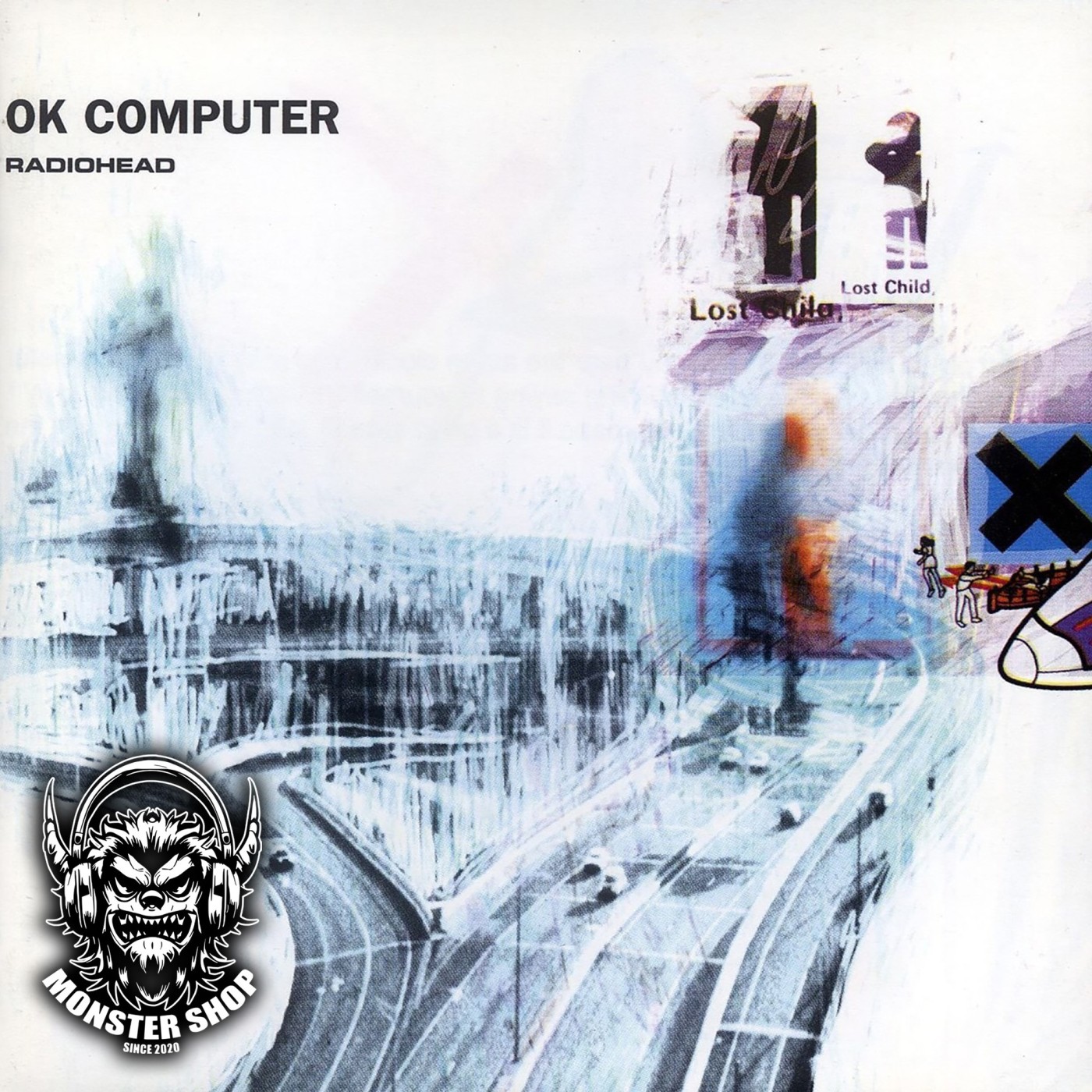
- The album cover as collage of alienation, motorways and glitchy text, and why shrinking it to a streaming thumbnail robs it of half its power.
- Where OK Computer sits in the loudness wars, dynamic range charts and Radiohead's own catalogue, and why its push and pull still rewards turning the volume up.
Featured Tracks & Analysis:
The conversation keeps circling back to the songs that define this record for different seasons of life. "Paranoid Android" becomes a case study in stitching three misfit ideas into one six minute anti chorus epic, with guitars that are deliberately too loud, drums that stay dry and compressed, and a solo that feels like someone gleefully breaking every scale rule they were ever taught. "Exit Music (For a Film)" is unpacked as the moment Muse basically got handed a template for half their catalogue, from whispered intro to choral explosion.
They pull apart "Karma Police" and "No Surprises" as unlikely pop hits about surveillance, burnout and quiet despair, then land on "Let Down" as the slow burn grower that sneaks up on you years later. There is attention to the practical studio decisions too, from choosing to track the band live to tape, to blending reverb from St Catherine's Court with close mics, and to the way Radiohead mix instruments together instead of carving tidy, polite spaces for everything.
Tangential Gold:
- Detours into haunted studios, from St Catherine's Court stories to why so many classic albums seem to live in slightly cursed houses.
- Dave Grohl clips, Sound City nostalgia and the idea that rooms and vibes shape chords and lyrics as much as plug ins do.
- Vinyl rituals, giant artwork and the sadness of seeing iconic covers reduced to tiny squares in Apple Music.
- Early internet chat rooms, Tom Yorke failing to convince fans he is actually himself, and the strange continuity between that and blue ticks.
- Modern AI detours, from Fred reading "Fitter Happier" to sky like voices, and how much time Neil now spends talking to his phone.
Why This Matters:
OK Computer is one of those rare albums that genuinely shifted what mainstream rock was allowed to sound like, making it okay to be knotty, anxious and sonically awkward without sacrificing scale or reach. By zooming in on its recording choices, its haunted spaces and its uneasy relationship with technology, Neil and Chris show how a record that could have remained a cult curio became the soundtrack to late 90s uncertainty and a template for the streaming era's most ambitious bands.
Re listening now, through better headphones and with decades of internet, social media and AI baggage piled on top, the lyrics about alienation, regurgitated culture and being fitter, happier and more productive feel less like sci fi and more like a diary. This episode gives you enough context, stories and production nerdery to fall in love with the record all over again or to finally understand why so many musicians still talk about it in hushed, slightly intimidated tones.
Perfect for: Anyone who bounced off OK Computer as a moody teenager, headphone listeners who love detours into haunted houses, studio gear and internet history, and music nerds who want to hear why a not very commercial record ended up quietly rewriting the rules.
You can find us here:
- Blog: https://riffology.co
- All Episodes: https://podkit.riffology.co/podcast
- iHeart: https://www.iheart.com/podcast/1323-riffology-iconic-rock-alb-176865775
- Apple: https://podcasts.apple.com/gb/podcast/riffology-iconic-rock-albums-podcast/id1691556696
- Spotify: https://open.spotify.com/show/1LIU9mein7QMw346q20nyy
- X: https://x.com/RiffologyPod
- Bluesky: https://bsky.app/profile/riffology.co
- Facebook: https://www.facebook.com/riffology
- Email: info@riffology.co